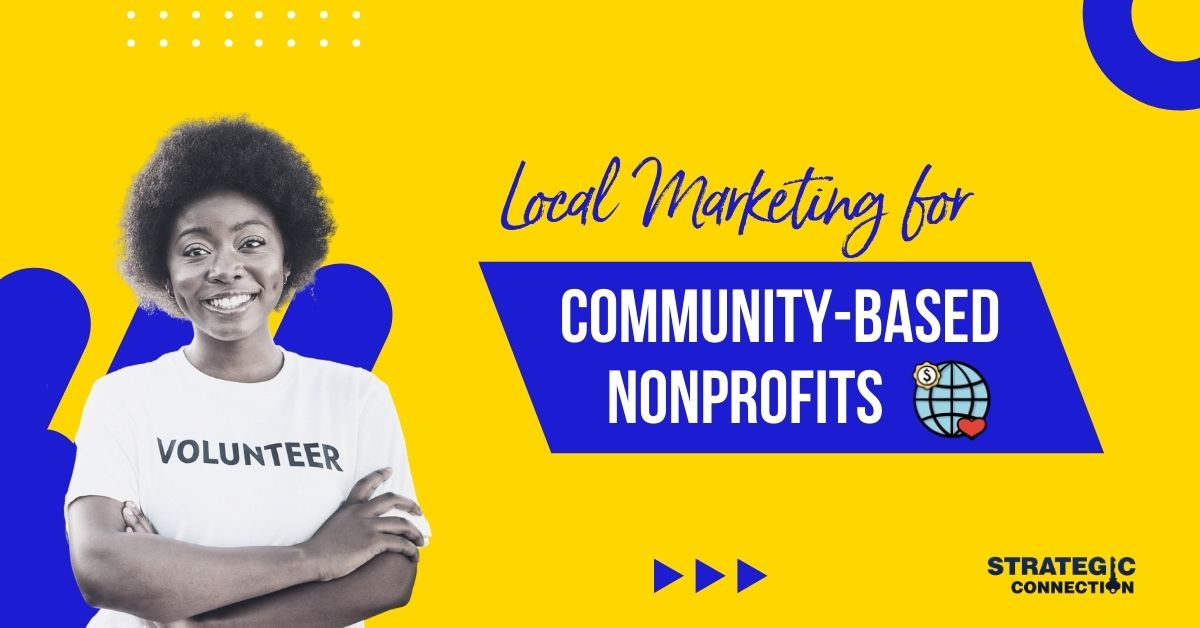
Local Digital Marketing Strategies for Community-Based Nonprofits
Posted by: Carl Jones
March 15, 2026
There is a very specific kind of stress that lives inside community-based nonprofit marketing.
It is the stress of knowing your organization is doing genuinely important work while your homepage still loads like it is buffering on coffee shop Wi-Fi from 2014. It is watching a team show up for food distribution, crisis support, youth counseling, or housing navigation with real heart, then realizing your digital presence still makes people work way too hard just to figure out where you are, what you do, and how to help. That is where nonprofit website optimization stops being a nice extra and starts becoming part of the mission.
That is why local digital marketing for nonprofits matters so much. Not because every nonprofit needs to chase national attention, but because local organizations need to be easy to find, easy to trust, and easy to support. Most people are not discovering community nonprofits through some cinematic brand journey. They are searching for help on their phones, hearing about you from a friend, spotting your event on a neighborhood calendar, or finally clicking that email they meant to open three days ago.
The good news is this: you do not need a huge budget, a viral video, or a marketing team with superhero-level stamina. You need a strong local foundation, a clear story, and a digital system that respects how people actually behave. For community-based organizations, trust still moves through human networks. That is why local digital marketing for nonprofits works best when it feels grounded and real.
Table of Contents
Why local matters more than flashy reach
A lot of marketing advice is secretly written for brands that want to sell everywhere to everyone. That is not the game most nonprofits are playing.
If your mission is rooted in a neighborhood, city, county, or region, your job is not to become internet famous. Your job is to become locally obvious. When someone searches for a food pantry, youth services, counseling, or ways to volunteer nearby, your organization should feel like the natural answer. That is the heart of nonprofit local marketing. It is less about broad awareness and more about showing up in the exact places where people are already looking.
Community-based organizations also have something national brands cannot fake: proximity. People trust groups that understand their streets, schools, transit lines, and daily reality. That trust is not just a nice feeling. It drives donations, volunteer signups, referrals, and form completions. Good community nonprofit marketing makes that trust visible online, and that is exactly what strong local digital marketing for nonprofits is designed to support.
What local visibility really means
Local visibility is not just posting on social media and hoping for the best. It is showing up across the digital places where people check, compare, and confirm. Search results. Google Maps. Partner websites. Local news coverage. Event calendars. Reviews. Emails. Text reminders.
The nonprofit that feels visible online is often not the one posting the most. It is the one removing the most friction. That is why nonprofit website optimization matters so much. If your website is slow, vague, or confusing, every other channel has to work twice as hard. The smartest local digital marketing for nonprofits starts by fixing those gaps first.
Build your local search foundation first
If your organization does nothing else this quarter, tighten up your local search foundation.
Start with your Google Business Profile. For many nonprofits, it is the first impression before your website even gets a chance. Your profile should have accurate categories, current hours, clear service descriptions, updated photos, and consistent contact information. If those basics are off, people lose confidence fast.
Your website needs to back that up. Every core service deserves its own page. Not one generic “Programs” tab that tries to do everything. A real page for food access, housing help, counseling, youth services, volunteer opportunities, or whatever your organization actually offers. Each page should explain who it is for, how it works, where it happens, and what someone should do next. That is one of the clearest wins in local seo for nonprofits.
This is where many organizations get too clever. Please do not make people decode your navigation like it is an escape room. If someone needs help, give them a direct path. If someone wants to donate, do not hide the button beneath a wall of text and a giant hero image. Good nonprofit website optimization is often less about adding more and more about getting out of people’s way.
The mobile experience has to work
A lot of nonprofit traffic comes from mobile, which makes sense because that is how people live. They are searching while waiting in line, sitting in the school pickup lane, or texting a friend for more information. If your site is hard to read on a phone, if buttons are too small, or if forms are painful to complete, you are losing people before they ever engage.
At the same time, donation behavior still often finishes on desktop. So the answer is not “mobile only.” The answer is consistency. Your site should feel fast, clean, and trustworthy on every device. This is where nonprofit website optimization becomes more than a technical checklist. It shows up in button placement, donation form design, page speed, click-to-call options, and whether visitors can find what they need without frustration. In practice, local digital marketing for nonprofits only works when the experience feels seamless from first click to final action.
Accessibility is part of marketing
Accessibility is not a side issue. It is part of how people experience your mission.
Readable text, useful alt text, keyboard-friendly navigation, clear form labels, and logical page structure all make your site easier to use. Yes, accessibility matters for compliance. But more importantly, it matters because the people who need your help should actually be able to access it. Real nonprofit website optimization includes accessibility from the start, not as an afterthought.
Create content people actually search for
One of the biggest mistakes nonprofits make is writing like an annual report when they really need to write like a helpful neighbor.
People are not usually searching for your mission statement. They are searching for answers. Do you serve their ZIP code? Is the pantry open on Thursdays? Are services confidential? Can they bring their kids to the event? Is there parking? Do volunteers need training? Can they donate items instead of money?
Your content strategy should reflect those real questions. Build service pages, event pages, FAQ pages, and location-specific content when relevant. Tell stories that connect outcomes to real community life. That is a huge part of nonprofit location-based marketing because the closer your content matches real local needs, the easier it is for people to find the right path.
The best nonprofit content usually sounds less impressive in a meeting and much more effective in real life. “Get food in Oak Park” will beat “community nourishment pathways” every day of the week. You are not dumbing it down. You are opening the door.
This matters especially for millennials, who are generous, skeptical, mobile-first, and very good at closing tabs the second something feels confusing or performative. Strong local digital marketing for nonprofits respects that behavior instead of fighting it.
Turn real-world work into digital momentum
This is the part where community-based nonprofits usually have more material than they think.
A recurring food drive. A school partnership. A volunteer day. A workshop. A neighborhood event. These are not just “content ideas.” They are proof that your organization exists in public and is worth trusting.
That is what makes community nonprofit marketing work so well when it is done right. The goal is not to manufacture hype. The goal is to translate real-world action into digital momentum. One event can become a landing page, a short email series, a few social posts, partner outreach, reminder texts, photos, and a follow-up story. The internet loves novelty. Communities love consistency. For nonprofits, consistency usually wins.
This is another place where nonprofit website optimization pays off. If your campaign page is clear, searchable, mobile-friendly, and tied to one obvious action, every email, post, and partnership works harder. That is also where local digital marketing for nonprofits becomes measurable instead of theoretical.
Use email, text, and paid search to support local campaigns
Email is not dead. It is just no longer impressed by lazy strategy.
If someone volunteers, attends an event, downloads a resource, or donates once, they should not disappear into the void. They should move into a simple follow-up journey. Thank them. Show impact. Invite the next step. Keep it relevant and easy to read.
Paid search can help too, especially when it supports high-intent searches around services, programs, and community action. When paired with strong landing pages, local seo for nonprofits and paid campaigns can reinforce each other instead of competing.
Text messaging is also useful for reminders and event turnout, as long as you use it with some restraint. Nobody wants their phone lighting up like a family group chat during the holidays. But a well-timed text for a volunteer shift, giving day, or registration deadline can do real work. That is nonprofit location-based marketing at its best: timely, useful, and tied to local action.
Measure what matters
Too many nonprofit teams burn energy tracking impressions while under-measuring the stuff that actually changes outcomes.
Track calls. Track form completions. Track volunteer signups. Track event registrations. Track donation conversion rates. Track repeat donors. Track where people drop off. Track which pages bring in local traffic and which partner sites send useful referrals. Those are the signals that improve real community access and real community support.
This matters even more because nonprofit teams are already stretched thin. The goal is not to measure everything. The goal is to measure the actions that create more help, more trust, and more sustainable support. Done well, nonprofit website optimization becomes less of a vague marketing task and more of a practical growth tool.
Conclusion
The best local digital marketing for nonprofits is not flashy. It is useful. It respects people’s time. It sounds like real humans. It makes trust visible.
That means owning your local search presence, simplifying your site, creating content that answers real questions, and building campaigns that reflect the actual work happening in your community. It means treating website performance as part of service delivery, not just part of marketing. It means investing in smarter nonprofit local marketing so the right people can find you, trust you, and take the next step.
For community-based organizations, local is not small. Local is intimate. Local is memorable. Local is where trust starts. That is the real power of local digital marketing for nonprofits.
If your nonprofit is ready to improve visibility, sharpen messaging, and build a digital presence that actually supports the mission, contact Strategic Connection at 800-383-0515. We have a track record for helping organizations strengthen their local digital marketing for nonprofits with clearer strategy, better content, and websites designed to serve real people in real communities.
More blogs you'll like to read.